Google's New Feature To Help Chromebook Users Prevent Attacks Over USB Ports
Anita
Google developed USBGuard as a measure to prevent Rubber Ducky attacks. Besides, it may come to the stable versions of Chrome OS in the coming time.
- 13 Underrated Google Wallet Features Youre Probably Ignoring (And Theyre Not Credit Cards)
- Google Pixel Battery Scandal Illustrates Why Capacity Rules the Smartphone Market
- Google's Project Toscana: Elevating Pixel Face Unlock to Rival Apple's Face ID
The tech giant, Google, has announced the supplement of a new kind of security feature to the web-based operating system, Chrome OS that is destined for Chromebook laptops.
USBGuard is the name of this latest feature. It aims to prevent attacks from accessing laptops via USB ports while the screen of the Chromebook is locked.
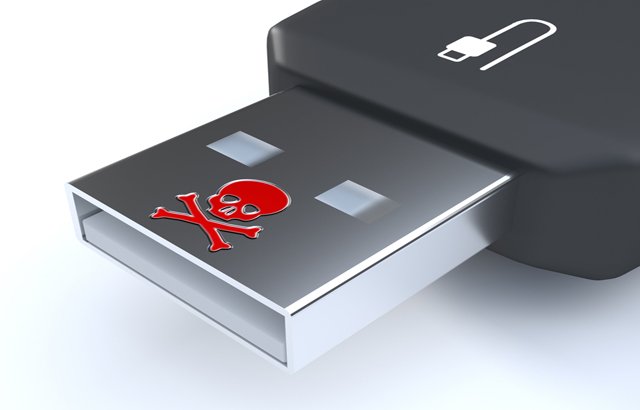
At the beginning of this week, Chrome Story spotting a source code commit for Chrome OS revealed that users can now use USBGuard in Canary builds of the operating system. Besides, it may come to the stable versions of Chrome OS in the coming time.
In this case, to activate the new feature, users need to modify the Chrome OS flag as follows: chrome://flags/#enable-usbguard.
The main function of the security feature is to bar the operating system from executing, as well as reading all codes when a USB is connected to the laptop which is being locked.
Google developed USBGuard as a measure to prevent Rubber Ducky attacks. For those who don't already know, a Rubber Ducky is known as a harmful USB thumb drive that can copy a keyboard and run virulent commands when it is linked to a computer.
Similar to Rubber Ducky, PoisonTap, BadUSB, USBHarpoon, and USBdriveby have been also available on the Internet, which allows users to easily create a tool to attack through USB ports.
Attackers can access temporarily to any computers if they have a tool connected on these computers, even in the far distance, to collect data or pass harmful programs from their computers.
Fortunately, users can disable their USB ports on their laptops to avoid most attacks in security. Therefore, Google is making its efforts to offer Chromebook users a feature to deactivate all USB ports on their devices, even when they are not using these devices or locking the screen.
For further information, Apple also added this option for its operating system, iOS 11.4.1, 5 months ago. Before this OS allows every activity over USB ports, it will ask users to unlock their laptops that are in a locked state in one hour.
Featured Stories
ICT News - Sep 19, 2026
Washington Acknowledges Operational Weapons in Earth Orbit
ICT News - Aug 04, 2026
Telegram Vanishes from Apple App Store Worldwide
ICT News - Jul 31, 2026
Russian Buyer Finds Water Bottle in $1,125 Graphics Card Box
ICT News - Jul 29, 2026
The RAM Crisis: Graphics cards shoot up in prices again
ICT News - Jun 27, 2026
OpenAI Launches Limited GPT-5.6 Preview Amid U.S. Security Review
ICT News - Jun 16, 2026
Elon Musk Becomes World's First Trillionaire After SpaceX's Record IPO
ICT News - Jun 14, 2026
The Technological Revolution at the 2026 FIFA World Cup
ICT News - Jun 03, 2026
Apple's Liquid Metal Hinge Poised to Deliver Breakthrough for Foldable iPhone...
ICT News - May 29, 2026
New Glenn Rocket Explodes in Massive Fireball During Static Fire Test at Cape...
Mobile - May 24, 2026