Apples Testifies That Qualcomm Declined To Sell It Chips
Dhir Acharya - Jan 15, 2019
In its testimony before the US Federal Trade Commission, Apple said that Qualcomm refused to sell it chips, forcing it to exclusively use Intel chips.
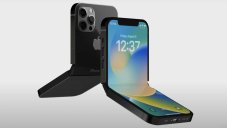
- Apple's Liquid Metal Hinge Poised to Deliver Breakthrough for Foldable iPhone After 16 Years of Quiet Research
- iOS 26.5's Under-the-Radar Features: Secret iPhone Tools You Need to Try
- iPhone 18 Rumors Suggest a Significant RAM Upgrade to 12GB
Apple says that it intended to use Qualcomm modems for its iPhone XS, iPhone XS Max, and iPhone XR; however, Qualcomm declined to sell them its chips. Qualcomm’s reaction was because of Apple’s lawsuit over its licensing practices.
Today, Apple COO Jeff Williams testified to the US Federal Trade Commission that in the end, Qualcomm didn't support or sell chips to the company. Instead, the company had to use LTE chips from Intel.

Apple COO Jeff Williams
Currently, Qualcomm is on trial, facing the accusation of monopolistic actions including charging abnormally high licensing fees, not licensing patents to other chip producers, and pledging deals to clients (like Apple) under the condition that it used Qualcomm chips exclusively.
Although it seemed that Apple initially changed to use Intel chips exclusively for spite and competitive causes, in court, the iPhone maker denied that. Williams explained that the company initially wanted to place half of its order at Qualcomm and the rest at Intel. Then when Qualcomm didn’t sell it chips, they had to turn to Intel.
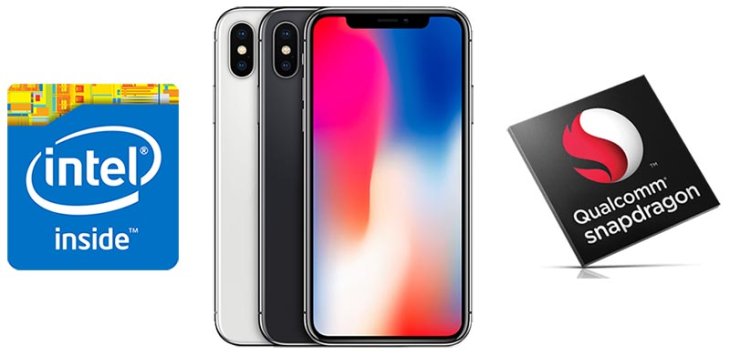
Since Intel will not release 5G chips before 2020, this may seriously block Apple’s plan to make and sell 5G iPhones. Moreover, Intel’s LTE modems are slower than those of Qualcomm. Previously, when Apples was still buying chips from both Intel and Qualcomm, it had to slowdown Qualcomm’s chips so that every iPhone ran at the same speed.
William also revealed how much Apple has been paying Qualcomm: $7.5 per device, while Apple wanted to pay only one-fifth of that, $1.5 per device. Williams continued by saying Apple did not have the option to sue Qualcomm as it would lose its major chip provider.
The conflict between two companies began in 2017 when the iPhone maker filed a lawsuit against the chip maker over licensing terms. Qualcomm stroke back by suing Apples for infringing its patents as well as providing its information to Intel.
In October 2018, Qualcomm said Apple owes a total royalty payment of $7 billion. Furthermore, the giant chip maker took the lawsuit to international courts in China and Germany, successfully persuading the judges to ban the company from selling some of its iPhones in the countries.
In Germany, Apple had to recall all of its iPhone 7 and 8 from its retail stores and third-party sellers. In China, it had to update software on its iPhones to avoid sales ban, except for the latest models.
Featured Stories

ICT News - Sep 19, 2026
Washington Acknowledges Operational Weapons in Earth Orbit

ICT News - Aug 04, 2026
Telegram Vanishes from Apple App Store Worldwide

ICT News - Jul 31, 2026
Russian Buyer Finds Water Bottle in $1,125 Graphics Card Box
ICT News - Jul 29, 2026
The RAM Crisis: Graphics cards shoot up in prices again

ICT News - Jun 27, 2026
OpenAI Launches Limited GPT-5.6 Preview Amid U.S. Security Review

ICT News - Jun 16, 2026
Elon Musk Becomes World's First Trillionaire After SpaceX's Record IPO

ICT News - Jun 14, 2026
The Technological Revolution at the 2026 FIFA World Cup
ICT News - Jun 03, 2026
Apple's Liquid Metal Hinge Poised to Deliver Breakthrough for Foldable iPhone...

ICT News - May 29, 2026
New Glenn Rocket Explodes in Massive Fireball During Static Fire Test at Cape...

Mobile - May 24, 2026
Comments
Sort by Newest | Popular