Some Apps Skirt Google Policies And Charge Users For Simple Services Like Calculators
Aadhya Khatri - Sep 30, 2019
These apps on the Google Play Store are not exactly malware, but they scam users of their money. And so far, they have amounted around 20 million downloads
- 13 Underrated Google Wallet Features Youre Probably Ignoring (And Theyre Not Credit Cards)
- Google Pixel Battery Scandal Illustrates Why Capacity Rules the Smartphone Market
- Google's Project Toscana: Elevating Pixel Face Unlock to Rival Apple's Face ID
We have heard of all kind of malware with different ways to sneak in the Google Play Store, and here is another with an elaborate scheme.
Recently, Fleeceware, a whole new category of apps, has been revealed on Google’s store. They abuse its policies and charge users a hefty amount of hundreds of dollars for simple services like QR Code scanners and calculator.
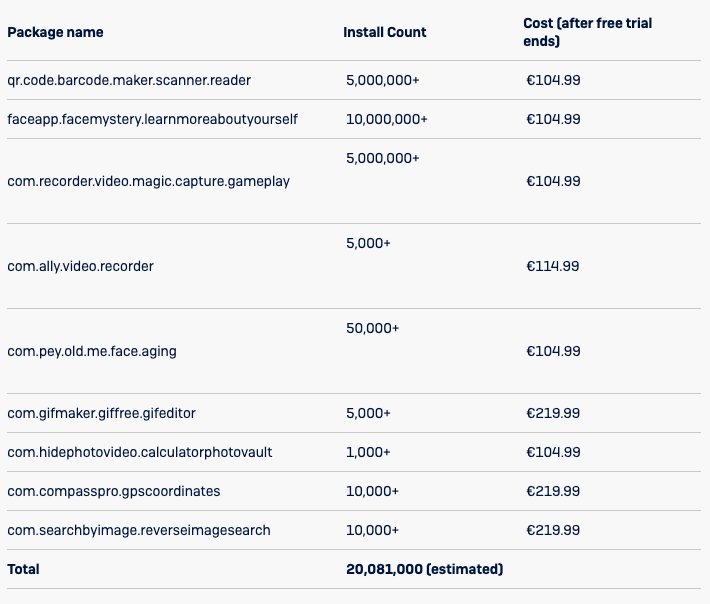
These apps are not exactly malware, but they obviously scam users of their money. And so far, they have amounted around 20 million downloads.
This Fleeceware was caught red-handed by Sophos’s researchers. The developers of these apps were found to exploit the free trial period to scam users around $100 to $240 when the trial ends.
In most cases, the free trial means to encourage users to try out the app’s features without being charged anything. Google lets developers offer this for at least three days after the app is installed.
The policies also say that users must first cancel the trial and then uninstall the app. Some people will automatically translate uninstallation to cancelation; however, others will find a way to skirt Google’s policies by charging users when the trial period ends even if they have uninstalled the app. These apps exist in a grey area so they are not exactly malware or PUA (short for potentially unwanted app). This is why they call them fleeceware, apps that charge a hefty amount for free services.
After Google was informed about some developers bending its rules, 14 out of 15 of said apps have been pulled from its Play Store. However, the researchers found out about nine more apps that use the same scheme. For now, they are still available to download. These apps can avoid the screening of Google and they take advantage of the fact that most people will not read the terms of use. That is not all, they are not even unique or effective.
Featured Stories

ICT News - Sep 19, 2026
Washington Acknowledges Operational Weapons in Earth Orbit

ICT News - Aug 04, 2026
Telegram Vanishes from Apple App Store Worldwide

ICT News - Jul 31, 2026
Russian Buyer Finds Water Bottle in $1,125 Graphics Card Box

ICT News - Jul 29, 2026
The RAM Crisis: Graphics cards shoot up in prices again

ICT News - Jun 27, 2026
OpenAI Launches Limited GPT-5.6 Preview Amid U.S. Security Review

ICT News - Jun 16, 2026
Elon Musk Becomes World's First Trillionaire After SpaceX's Record IPO

ICT News - Jun 14, 2026
The Technological Revolution at the 2026 FIFA World Cup

ICT News - Jun 03, 2026
Apple's Liquid Metal Hinge Poised to Deliver Breakthrough for Foldable iPhone...

ICT News - May 29, 2026
New Glenn Rocket Explodes in Massive Fireball During Static Fire Test at Cape...

Mobile - May 24, 2026
Comments
Sort by Newest | Popular