WhatsApp Defends Its Updated Privacy Policies, What Does It Have To Say?
Dhir Acharya - Jan 14, 2021
While a lot of users are ditching WhatsApp and turning to other messaging apps, the company explains what the new policies mean for them.
- Photos In WhatsApp Chats Will Self-Destruct If This Feature Comes To Life
- How To Export Your Old Messages From Social Media
- How To Use Signal To Replace WhatsApp, The App That Forces Us To Share Private Info With Facebook
This week, WhatsApp published an FAQ to clarify the new terms of its privacy policy and respond to concerns that the company shares users’ private information with Facebook.
The popular messaging platform noted that the change does not affect the privacy of users’ messages with their friends and family. Instead, it’s aimed at businesses that message on the platform. The firm added that the update provides greater transparency about how it collects and uses data.
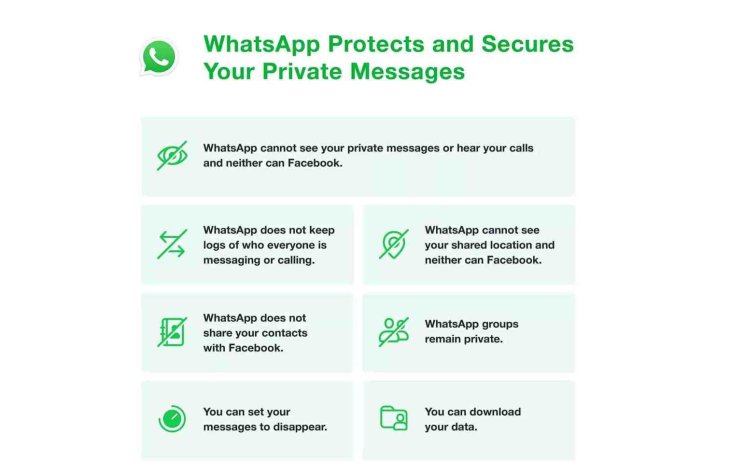
The company stressed that Facebook and itself cannot see private messages or listen to calls. In addition, the company does not keep logs of people calling or messaging, cannot see users’ shared location, does not share contacts of users with Facebook, and keeps the groups on its platform private, as stated in the FAQ.
The newly published FAQ after concerned users like Elon Musk and privacy advocates called for ditching the app and using encrypted messaging apps instead. According to WhatsApp, personal messages are protected by end-to-end encryption but the company has openly gathered user data and share it with Facebook for years.
Under the updated privacy policy, businesses can choose the “secure hosting services from Facebook to manage WhatsApp chats with their customers, answer questions, and send helpful information like purchase receipts.” That means, if an individual user communicates with a business, WhatsApp can see the conversation and use this information for marketing, including Facebook ads. The firm said such conversations are labeled clearly.
Besides, the shopping activity of users interacting with the Shops commerce feature of Facebook through WhatsApp can be used for displaying targeted ads on Instagram and Facebook. According to the messaging platform, the feature is optional and users will be notified when their interaction is used.
Lastly, if you opt for messaging a business through WhatsApp after seeing its ad on Facebook, Facebook could use this interaction method with that ad and show more related ads on Facebook.
On Friday, Will Cathcart, head of WhatsApp, tweeted:
“With end-to-end encryption, we cannot see your private chats or calls and neither can Facebook. We're committed to this technology and committed to defending it globally.”
Featured Stories

ICT News - Oct 22, 2026
Black October: Major Cyber Incidents Flood the Last 48 Hours

ICT News - Sep 19, 2026
Washington Acknowledges Operational Weapons in Earth Orbit

ICT News - Aug 04, 2026
Telegram Vanishes from Apple App Store Worldwide

ICT News - Jul 31, 2026
Russian Buyer Finds Water Bottle in $1,125 Graphics Card Box

ICT News - Jul 29, 2026
The RAM Crisis: Graphics cards shoot up in prices again

ICT News - Jun 27, 2026
OpenAI Launches Limited GPT-5.6 Preview Amid U.S. Security Review

ICT News - Jun 16, 2026
Elon Musk Becomes World's First Trillionaire After SpaceX's Record IPO

ICT News - Jun 14, 2026
The Technological Revolution at the 2026 FIFA World Cup

ICT News - Jun 03, 2026
Apple's Liquid Metal Hinge Poised to Deliver Breakthrough for Foldable iPhone...

ICT News - May 29, 2026
New Glenn Rocket Explodes in Massive Fireball During Static Fire Test at Cape...
Read more
ICT News- Oct 22, 2026
Black October: Major Cyber Incidents Flood the Last 48 Hours
The volume and severity of these events mark one of the most intense periods in recent cybersecurity history.
Comments
Sort by Newest | Popular