How Does The Upgraded Version of Wi-Fi, LiFi Actually Work?
Saanvi Araav - Apr 23, 2019

LiFi is a great technology of wireless communication which has the ability to replace Wi-Fi in the future.
- Receive Buffers And Other Tips To Improve Your Internet Connection
- Internet Shutdowns In India By The Government Caused A $2.7 Billion Loss In 2020
- You May Not Know These Things From Before The Internet
Maybe you already know but it is worth to repeat that a good Wifi is truly the game changer in the IT infrastructure nowadays. Both on a professional and personal level too. For example, you do not wish to watch a video with many buffers, right?
Therefore, are you excited for a wireless network system that could deliver 100 times faster than normal Wi-Fi at the same time also being more secure and reliable?
In fact, that is a real technology and it is coming to us. The invention of the amazing LiFi has sparked a fresh value altogether for transmission of data in our today world. That is Light Fidelity (LiFi) which gonna become the next evolution in in-house wireless technology. So you might want to find out how does it work exactly first.
What is LiFi?
Basically, Wi-Fi is a technology that transmits data using access points with radio technology. So not like Wi-Fi, LiFi is a system based on Visible Light Communication(VLC).
So a VLC system does its communication via illumination. Thus, LiFi uses light, as the light from those light bulbs that we could see all around us to transmit the data. With the light, it runs the communications wirelessly with the ability to travel in a much higher speed rate. With LiFi, they will turn the normal LED bulb in your house into an internet router which capable of transmitting data with the speed of up to 224 gigabits/s. Which that internet speed - you could potentially download all 18 movies, each 1.5GB in just one single second.
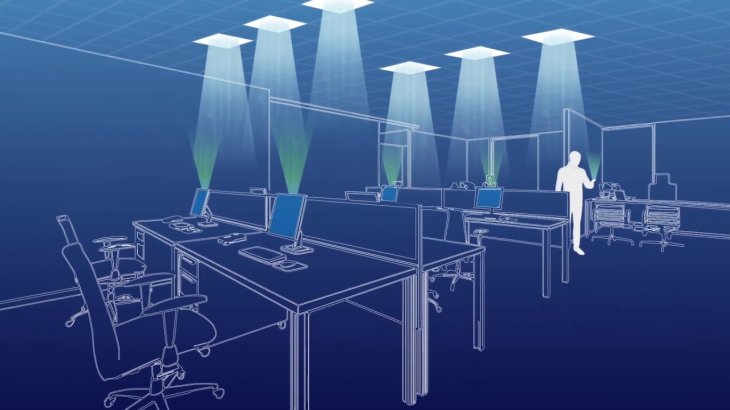
Moreover, this new technology is also much more secure than Wi-Fi. It is also capable of reaching those areas that radio frequencies could reach. With the amazing speed, this new technology will create a huge impact on the IoT (Internet of Things) too. It will allow lots of devices to connect to the network at the same time with a high data transfer rate and high network cap.
One other advantage of LiFi is that it couldn't go through walls like Wi-Fi. Therefore, you don't have to worry anymore about those pesky neighbors who always looks out for the Wi-Fi password.
What's a great technology! LiFi will give us much more power to support our ever-increasing reliable and robust wireless networks.
How does it actually work?
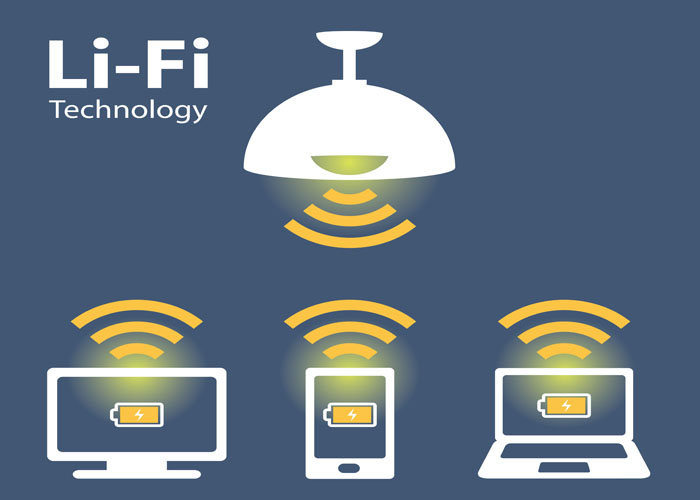
I think that we all too well aware of the existing Wi-Fi technology that uses varied frequencies on the spectrum to transmit data. In the case of LiFi, it uses the visible light to transmit that communication (VLC). With LiFi, you will need a photo-detector to receive the signals from LiFi and also a processor to translate that data into actual content. So the LED light bulbs will work as a semiconductor to transmit high-speed communication wirelessly.
To use LiFi they would apply a constant stream to the LED bulb. Then it emits to the surrounding environment constant photon streams which also are the visible light. This current then gives out a steadily and slowly variation as the bulb dim down and up. So these LED bulbs are in the semiconductor family, the optical and current output can be adjusted as a very high speed which could be detected by photo-detector then convert back into electrical current.
Moreover, the LED bulbs turn off and on in just an instant. It is so quick that the human eye just cannot detect it.
However, will it work in the dark?
Well, we know that the LiFi uses LED bulbs as the access points, so people usually wonder if it could work in the absence of light or not. Let's put a stop to all the questions regarding that subject. Yes, LiFi will work when the lights are off. Pure Light has announced that the technology is capable of sending signals with a light of only 60 Lux. So the lights are actually on - just you don't notice that. Moreover, we could also use LiFi in direct sunlight with a special filtering process on the receivers.
LiFi is coming, so prepare for it, guys!
Featured Stories

ICT News - Sep 19, 2026
Washington Acknowledges Operational Weapons in Earth Orbit

ICT News - Aug 04, 2026
Telegram Vanishes from Apple App Store Worldwide

ICT News - Jul 31, 2026
Russian Buyer Finds Water Bottle in $1,125 Graphics Card Box

ICT News - Jul 29, 2026
The RAM Crisis: Graphics cards shoot up in prices again

ICT News - Jun 27, 2026
OpenAI Launches Limited GPT-5.6 Preview Amid U.S. Security Review

ICT News - Jun 16, 2026
Elon Musk Becomes World's First Trillionaire After SpaceX's Record IPO

ICT News - Jun 14, 2026
The Technological Revolution at the 2026 FIFA World Cup

ICT News - Jun 03, 2026
Apple's Liquid Metal Hinge Poised to Deliver Breakthrough for Foldable iPhone...

ICT News - May 29, 2026
New Glenn Rocket Explodes in Massive Fireball During Static Fire Test at Cape...

Mobile - May 24, 2026
Comments
Sort by Newest | Popular