Blockchain To Help E-commerce Become Cheaper And Fairer
Maya Bhagat - May 27, 2019

A Blockchain-based system will soon make e-commerce more convenient, cheaper and fairer as sellers and buyers can interact directly.
- Blockchain-Based App 'Smashboard' Aims To Help Sexual Assault Victims, Especially In India
- Mitsubishi-Backed Company Brings Blockchain-Attached Salmon To Consumers
- Maharashtra Government Plans To Use Blockchain In Several Departments Of The Authority
There will soon be an e-commerce platform making digital merchandise “cheat proof” and the goods lower-priced, thanks to a system based on Blockchain where sellers and buyers can directly connect to each other through it. With Blockchains, multiple stakeholders can exchange cash or information virtually through computer networks. Moreover, “smart contracts” and game theory also will change the way we sell and buy goods online.
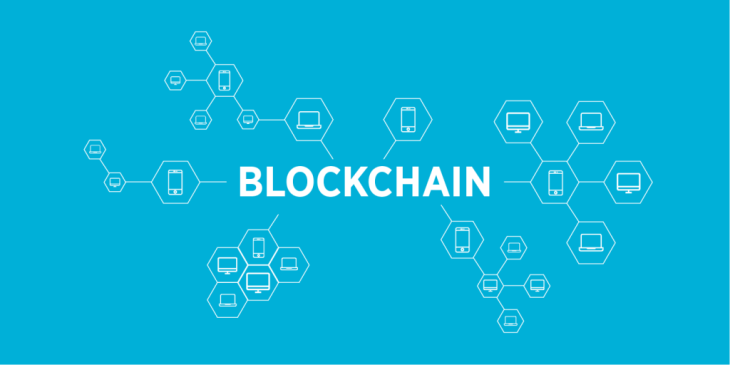
Blockchain
The University of Southern California Professor, Bhaskar Krishnamachari said that a great improvement over the state-of-the-art in e-commerce is offered as suppliers can work with consumers while there is no demand for other intercessors. The “smart contract” was created by Krishnamachari and Aditya Asgaonkar, a BITS Pilani undergraduate alumni.
Saying about their scheme, Krishnamachari also pointed out that a dual-deposit methodology is employed to escrow a security deposit from both suppliers and consumers. It is backed to them only when they are honest. It's actually the duty of the "smart contract" to get to know automatically where the fault came from.
It is said that a good’s digital hash code and “digital fingerprint” are stored in this "smart contract".
How Does The System Work?
For example, an author has a demand for selling her digital book without going through any third-party companies. Instead of using Amazon, she chooses the solution above and sells the book at price $20.
How to make sure that the deal is implemented honestly? This is implemented when both the supplier and customer comfort to give a $10 deposit through a Blockchain platform. Then, the buyer receives the digital one which could only be accessed when he/she pay the correct amount of money.
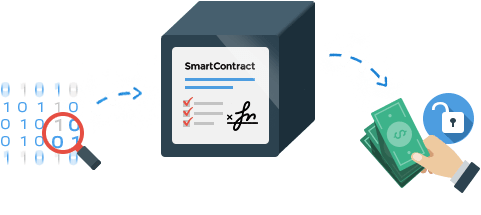
The buyer could only open the good by paying the correct amount of money
Their deposits will be sent back if both parties satisfied with the transaction. However, what happens when there is any cheat? If the supplier sends the unright e-book on purpose, what does the aggrieved party receive?
Now, the smart contract will kick in. As said before, the contract keeps a good’s digital hash code. And before creating an acquisition, the customer has to access this code. Thus, a different hash code can make them doubt the exchange.
As a result, the supplier would lose their deposit as the algorithmic program determined that he/she had tried to cheat the customer. Now, the system just deals with digital goods instead of physical products which have no cryptographical hash related to them. Nonetheless, some physical goods still could be potentially transacted using their system if they are kept in a safe-box that can be accessed with a digital PIN.
The researchers’ joint paper was presented by Asgaonkar at the IEEE International Conference taking place in Seoul, South Korea.
Featured Stories

ICT News - Sep 19, 2026
Washington Acknowledges Operational Weapons in Earth Orbit

ICT News - Aug 04, 2026
Telegram Vanishes from Apple App Store Worldwide

ICT News - Jul 31, 2026
Russian Buyer Finds Water Bottle in $1,125 Graphics Card Box

ICT News - Jul 29, 2026
The RAM Crisis: Graphics cards shoot up in prices again

ICT News - Jun 27, 2026
OpenAI Launches Limited GPT-5.6 Preview Amid U.S. Security Review

ICT News - Jun 16, 2026
Elon Musk Becomes World's First Trillionaire After SpaceX's Record IPO

ICT News - Jun 14, 2026
The Technological Revolution at the 2026 FIFA World Cup

ICT News - Jun 03, 2026
Apple's Liquid Metal Hinge Poised to Deliver Breakthrough for Foldable iPhone...

ICT News - May 29, 2026
New Glenn Rocket Explodes in Massive Fireball During Static Fire Test at Cape...

Mobile - May 24, 2026
Comments
Sort by Newest | Popular