Which AI Model Excels at Which Task in 2026: A Comprehensive Guide
Marcus Aurelius - Feb 22, 2026

In 2026, the best AI depends on your needs: Gemini for multimodal and speed, Claude for coding and reasoning, GPT for creativity, and Grok for straightforward tech insights.
- Palantir CTO Identifies Iran Conflict as First Large-Scale AI-Driven War
- AI's Role in Warfare: US Strikes on Iran Unveiled
- Elon Musk's Bold Chip Venture: Tesla's Massive Fab Initiative Sparks AI Hardware Competition
In the rapidly evolving world of artificial intelligence as of February 2026, no single model reigns supreme across all applications. Instead, different AIs shine in specific areas based on benchmarks, real-world tests, and developer feedback. This article breaks down key tasks and highlights the top performers. Whether you are a developer, writer, or business leader, understanding these strengths can help you choose the right tool for the job.

General Reasoning and Problem-Solving
For tasks involving complex reasoning, such as solving puzzles, ethical dilemmas, or multi-step problems, Google's Gemini 3 Pro stands out. It consistently tops benchmarks like GPQA Diamond with scores around 84.6 percent and demonstrates strong performance in maintaining context during extended interactions. In head-to-head tests, Gemini outperformed competitors like ChatGPT 5.2 and Claude 4.5 in problem-solving scenarios by providing more accurate and contextual responses. Anthropic's Claude Opus 4.5 is a close second, excelling in nuanced reasoning for legal or medical analysis, with a high score of 67.6 percent on advanced evaluation sets. OpenAI's GPT-5.2 also performs well here, particularly in high-stakes planning, but it can lag in speed compared to Gemini.
Coding and Programming
When it comes to generating, debugging, or refactoring code, Anthropic's Claude Opus 4.5 leads the pack with a SWE-bench score of 74.4 percent, making it ideal for massive, complex projects requiring deep understanding. Developers praise its precision in code reviews and handling large codebases, supported by a 1M token context window. OpenAI's GPT-5.2 Codex variant is favored for faster iterations and straightforward tasks, offering concise outputs tuned for agentic behavior. Google's Gemini 3 Pro ranks highly too, with top scores in coding challenges around 74.2 percent, especially for full-stack development. For open-source options, Meta's Llama 4 Scout provides massive context (up to 10M tokens) for extensive projects, though it trails in overall accuracy.
| Model | Best For | Key Strength | SWE-Bench Score |
|---|---|---|---|
| Claude Opus 4.5 | Complex projects | Deep understanding | 74.4% |
| GPT-5.2 Codex | Fast iterations | Speed and conciseness | 69% |
| Gemini 3 Pro | Full-stack coding | Balanced performance | 74.2% |
| Llama 4 Scout | Large codebases | Extended context | 55.4% |
Creative Writing and Content Generation
OpenAI's GPT-5.2 excels in creative writing, such as storytelling, poetry, or marketing copy, thanks to its natural conversational tone and high creativity scores. It often wins in tests for generating engaging, human-like text. Anthropic's Claude Sonnet 4.5 is strong for structured writing, like reports or essays, with an emphasis on safe and coherent outputs. xAI's Grok 4 provides concrete, witty responses, making it suitable for technical writing or humor-infused content. For open-source, GLM-4.7 Thinking offers near-frontier quality for free, ideal for self-hosted creative tasks.
Multimodal Tasks (Images, Video, and Data Integration)
Google's Gemini 3 Pro dominates multimodal tasks, integrating text with images and videos seamlessly, with native support for processing sensor data and achieving high MMMU scores of 81.3 percent. It is the go-to for applications like image generation or analyzing visual content, outperforming others in speed at 180 tokens per second. NVIDIA's NIM models are specialized for real-time image processing in robotics, reducing inference time by 30 percent. OpenAI's GPT-5 handles basic multimodal but falls short in native video capabilities compared to Gemini.
Speed and Efficiency
For tasks requiring quick responses, such as chatbots or real-time analysis, Gemini 3 Pro leads with output speeds up to 499 tokens per second in lightweight variants. Open-source models like Granite 3.3 8B push even higher at 521 tokens per second, making them cost-effective for high-volume use. Claude models, while powerful, are slower for iterative tasks, prioritizing accuracy over velocity.
Long-Context Handling
Handling extensive documents or conversations benefits from models with large context windows. Google's Gemini and Anthropic's Claude both offer 1M tokens, excelling in summarizing long texts or maintaining threads. Meta's Llama 4 Scout goes further with 10M tokens, perfect for enterprise-scale data analysis. GPT-5.2 provides 400K tokens, sufficient for most but not the longest tasks.
Conclusion
In 2026, the best AI depends on your needs: Gemini for multimodal and speed, Claude for coding and reasoning, GPT for creativity, and Grok for straightforward tech insights. Open-source options like GLM-4.7 or Llama offer value for custom setups. As AI advances, hybrid approaches combining models may become standard. Always test in your workflow to confirm fit, and stay updated with ongoing benchmarks.
Featured Stories
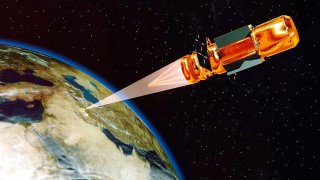
ICT News - Sep 19, 2026
Washington Acknowledges Operational Weapons in Earth Orbit

ICT News - Aug 04, 2026
Telegram Vanishes from Apple App Store Worldwide

ICT News - Jul 31, 2026
Russian Buyer Finds Water Bottle in $1,125 Graphics Card Box
ICT News - Jul 29, 2026
The RAM Crisis: Graphics cards shoot up in prices again

ICT News - Jun 27, 2026
OpenAI Launches Limited GPT-5.6 Preview Amid U.S. Security Review

ICT News - Jun 16, 2026
Elon Musk Becomes World's First Trillionaire After SpaceX's Record IPO

ICT News - Jun 14, 2026
The Technological Revolution at the 2026 FIFA World Cup
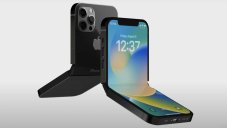
ICT News - Jun 03, 2026
Apple's Liquid Metal Hinge Poised to Deliver Breakthrough for Foldable iPhone...

ICT News - May 29, 2026
New Glenn Rocket Explodes in Massive Fireball During Static Fire Test at Cape...

Mobile - May 24, 2026
Comments
Sort by Newest | Popular