The Indian Government Wants To Spy On Your Social Media Activities
Harin
The Indian government has just proposed a set of amendments to the Information Technology (IT) Act, which raises concern over the privacy of Indian citizens.
- India To Release COVID-19 Contact-Tracing App For Feature Phones
- Your Computer Data Can Now Be Tracked And Monitored By The Indian Govt
- India To Soon Adopt Embedded Chip E-Passports For Better Functionality And Security
Some days ago, the Ministry of Home Affairs had granted 10 central agencies permission for computer data tracking, monitoring and intercepting. Now, the government has shifted its focus to online communications as well as social media including all your messages in WhatsApp, Facebook, and Twitter. A set of amendments has been forwarded to the Information Technology (IT) Act by the Indian government. The amendments raise concern on privacy invasion for Indian citizens.
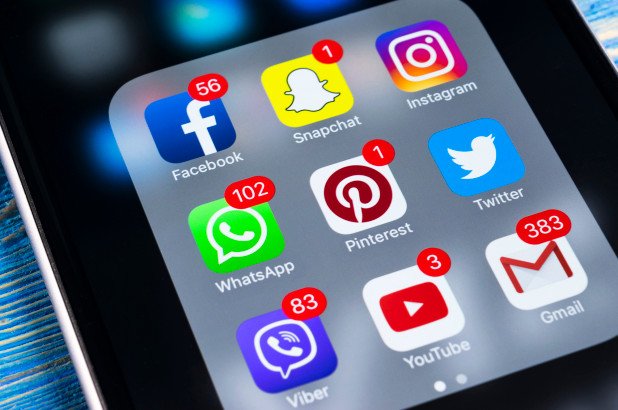
The amendment suggests terminating end-to-end encryption. This is the kind of encryption that WhatsApp uses for its platform, which doesn’t allow anyone but the message’s participants to read the whole conversation. Once end-to-end encryption is terminated, it would be a lot easier for authorities to spy on your personal messages. To make it worse, the end of end-to-end encryption will make it easier for hackers.
Another point is mentioned in the amendments is that “intermediaries,” which are providers of chat service like Google, Facebook, Twitter, and so on, need to follow the government directives and data requests in 72 hours. According to the government, whether to employ “automated tools” to block unlawful content access or not will depend on these intermediaries.
If you think this sounds oddly similar to the IT Act’s Section 66A from the Supreme Court back in 2015, you are correct. At that time, the government would arrest citizens posting things they did not like on social media.
If you find this similar to what’s happening in China with its strict censorship regulations, you’re absolutely right. In China, the government can delete content from social media if they don’t like it. Any information posted online will need to go through the government’s inspection first, which is probably why you hardly view or read anything related to the leadership of the country. For instance, all mentions or images or mentions of the character Winnie the Pool are banned in China due to people creating memes comparing his appearances with President Xi Jinping.
In the set of amendments, unlawful content is defined as “blasphemous, ethically objectionable, and disparaging," which is undoubtedly a vague definition, to be honest.
Apparently, this draft was discussed last Friday in a meeting with representatives from the Internet Service Providers Association of India, Facebook, Amazon, Google, Twitter, and WhatsApp. However, these tech giants have not released any official statement on this decision yet.
Will these groups abide by the amendments because of the threat of being kicked out of India? Maybe. Should Indian citizens worry about their privacy being invaded? Absolutely.
>>> With A Centralized System, Indian Government Wants To Monitor The Internet
Featured Stories
ICT News - Sep 19, 2026
Washington Acknowledges Operational Weapons in Earth Orbit
ICT News - Aug 04, 2026
Telegram Vanishes from Apple App Store Worldwide
ICT News - Jul 31, 2026
Russian Buyer Finds Water Bottle in $1,125 Graphics Card Box
ICT News - Jul 29, 2026
The RAM Crisis: Graphics cards shoot up in prices again
ICT News - Jun 27, 2026
OpenAI Launches Limited GPT-5.6 Preview Amid U.S. Security Review
ICT News - Jun 16, 2026
Elon Musk Becomes World's First Trillionaire After SpaceX's Record IPO
ICT News - Jun 14, 2026
The Technological Revolution at the 2026 FIFA World Cup
ICT News - Jun 03, 2026
Apple's Liquid Metal Hinge Poised to Deliver Breakthrough for Foldable iPhone...
ICT News - May 29, 2026
New Glenn Rocket Explodes in Massive Fireball During Static Fire Test at Cape...
Mobile - May 24, 2026