NASA Will Build Its First Planetary Defense Spacecraft
Harin - Jan 10, 2019
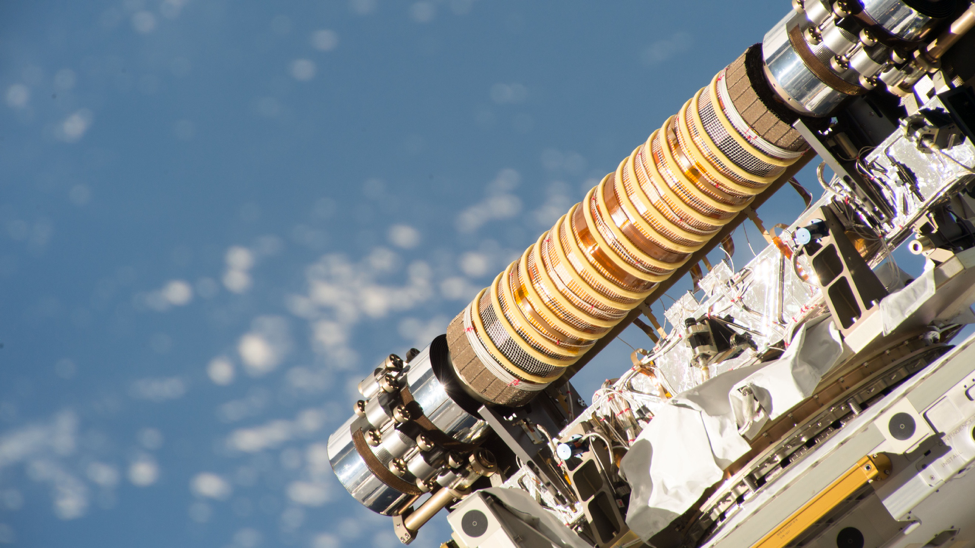
NASA has made an announcement on its plans to test its planetary defense system in real life in the next few years.
- Artemis II Crew Enters Moon's Gravitational Sphere on Historic Day 5
- Russia Will Build A Lunar Space Station With China Because It's Done With NASA
- NASA Reveals 20 Most Stunning Earth Images Taken From The ISS
Just like a scene from the movie Men in Black or Armageddon, NASA short for the National Aeronautics and Space Administration has made an announcement on its plans to test its planetary defense system in real life in the next few years. This is going to be a significant milestone for the Planetary Defense Coordination Office of NASA as well as planet Earth.
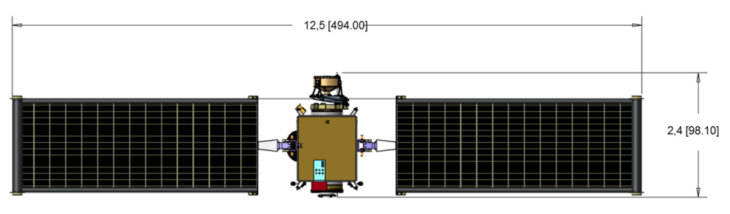
Most space enthusiasts and researchers would have the same opinion that the cause of dinosaurs’ extinction was an asteroid. These asteroids are still a serious threat to life on Earth. Even an asteroid with moderate size could cause apocalyptic like events which may lead to humans fighting for resources.
Although the modern civilization is extremely good at Near Earth Objects identification, science is still lacking necessary tools to properly handle any potential threats that may be coming towards the planet. But don’t you worry as NASA is here to save the Earth.
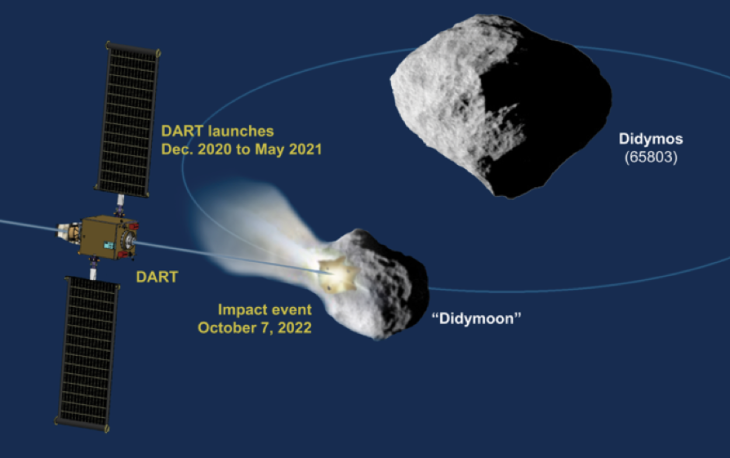
Known as the Double Asteroid Redirection Test (DART), NASA plans to create a collision between the DART spacecraft and Didymos, a non-threatening asteroid. With this, NASA can test the capability of redirecting celestial object’s direction of the shuttle.
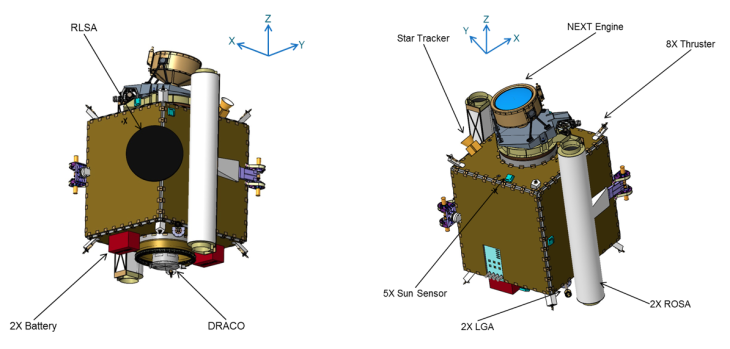
The Didymos has a size of 300 meters while its moonlet or secondary body is 150 meters in size. Didymos is the perfect experimental subject as it is the standard size of asteroids that are a common threat to planet Earth.
DART will be a representative case of using the kinetic impact technique in changing an asteroid’s motion in space.
After being 11 million kilometers away from Earth, the spacecraft will make a deliberate collision with the moonlet of Didymos. The speed of the crashing will be about 6 km per second. The DART spacecraft will be equipped with a sophisticated navigation software to maintain precision.
The spacecraft from NASA will use the NEXT-C (NASA Evolutionary Xenon Thruster-Commercial) on its journey towards the target Didymos. The DART spacecraft is expected to be launched in late Dec 2020 and to May 2021.
It will be quite interesting to see how this mission will be carried out to help NASA create more advanced technology for planet Earth’s protection.
Featured Stories
ICT News - Sep 19, 2026
Washington Acknowledges Operational Weapons in Earth Orbit

ICT News - Aug 04, 2026
Telegram Vanishes from Apple App Store Worldwide

ICT News - Jul 31, 2026
Russian Buyer Finds Water Bottle in $1,125 Graphics Card Box

ICT News - Jul 29, 2026
The RAM Crisis: Graphics cards shoot up in prices again

ICT News - Jun 27, 2026
OpenAI Launches Limited GPT-5.6 Preview Amid U.S. Security Review

ICT News - Jun 16, 2026
Elon Musk Becomes World's First Trillionaire After SpaceX's Record IPO

ICT News - Jun 14, 2026
The Technological Revolution at the 2026 FIFA World Cup

ICT News - Jun 03, 2026
Apple's Liquid Metal Hinge Poised to Deliver Breakthrough for Foldable iPhone...

ICT News - May 29, 2026
New Glenn Rocket Explodes in Massive Fireball During Static Fire Test at Cape...

Mobile - May 24, 2026
Comments
Sort by Newest | Popular