This Asteroid Came Close To Earth, But Fortunately Didn't Rock It!
Anil - Sep 12, 2019
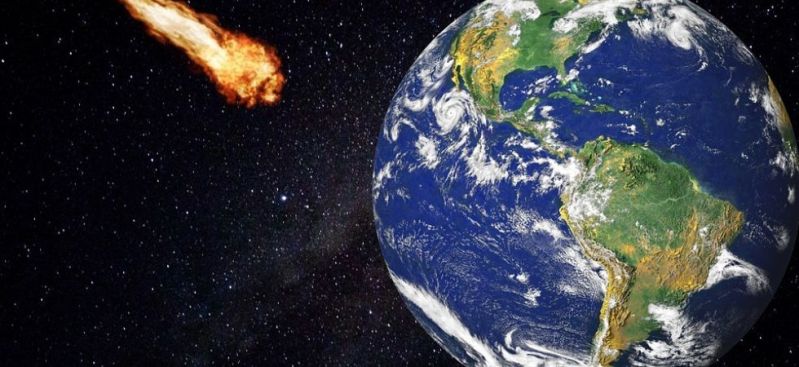
As calculated by NASA, the dimensions of this asteroid range between 29 ft and 65.6 ft.
- The First Space Hotel In The World Will Welcome 400 Guests
- Startup Builds Vehicle With Soviets Tech To Collect Space Garbage
- World's First Space Hotel To Begin Construction In 2025 With Rooms For 400 Guests
The mission of NASA's Near-Earth Object Research Center (CNEOS) is to track the movement of asteroids and comets that can collide with the Earth. In particular, according to Express UK, the asteroid 2019 RG2 crossed the Earth at 50,000 miles per hour (about 80,467.2 km per hour) on September 9, at 8:13 PM UTC.
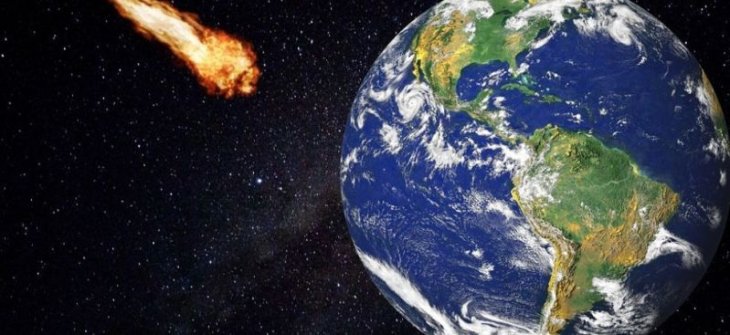
2019 RG2 was described as a near-Earth object (NEO) orbiting the inner circle of the solar system on a trajectory, like its predecessor, the asteroid 1862 Apollo. There are over 20,000 near-Earth asteroids and more than 100 near-Earth comets that have been tracked by NASA. As calculated by them, the dimensions of this asteroid range between 29 ft and 65.6 ft. With every passing second, it got closer to Earth at about 21.99 kilometers.
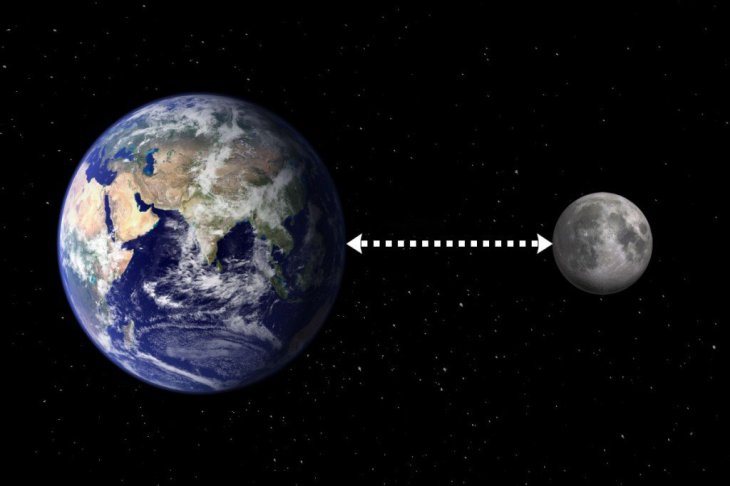
The closest estimate showed that the asteroid was approximately 0.00350 astronomical units (AU) far from the Earth. In which, an astronomical unit has the approximate distance of 149.6 million kilometers (similarly as traveling from the Earth to the Sun). This means that fortunately, the asteroid was 523,529 kilometers away from us, which equaled to the distance between the Earth and the Moon. Obviously, we and our Earth are not at any risk because it will safely pass at such a distance.
NASA claimed that sometimes such asteroids or comets will probably pass through our Earth. Although they seem to be very "close" to Earth, in reality, they can be millions or even tens of millions of kilometers away from us when we astronomically talk about "close" passage. Therefore, the information that RG2 asteroid dangerously approached the Earth, in fact, should not cause serious anxiety.
After this celestial event, NASA has not expected any other potential collisions to Earth from space in the future.
Featured Stories

Features - Mar 24, 2026
How to Use GeForce NOW to Play Video Games Without Actual Hardware

Features - Jan 29, 2026
Permanently Deleting Your Instagram Account: A Complete Step-by-Step Tutorial

Features - Jul 01, 2025
What Are The Fastest Passenger Vehicles Ever Created?

Features - Jun 25, 2025
Japan Hydrogen Breakthrough: Scientists Crack the Clean Energy Code with...

ICT News - Jun 25, 2025
AI Intimidation Tactics: CEOs Turn Flawed Technology Into Employee Fear Machine

Review - Jun 25, 2025
Windows 11 Problems: Is Microsoft's "Best" OS Actually Getting Worse?

Features - Jun 22, 2025
Telegram Founder Pavel Durov Plans to Split $14 Billion Fortune Among 106 Children

ICT News - Jun 22, 2025
Neuralink Telepathy Chip Enables Quadriplegic Rob Greiner to Control Games with...

Features - Jun 21, 2025
This Over $100 Bottle Has Nothing But Fresh Air Inside

Features - Jun 18, 2025
Comments
Sort by Newest | Popular