The Earth Sucks 30,000 Crore Kilograms Of Water Into Its Core Every Year
Dhir Acharya - Feb 04, 2019
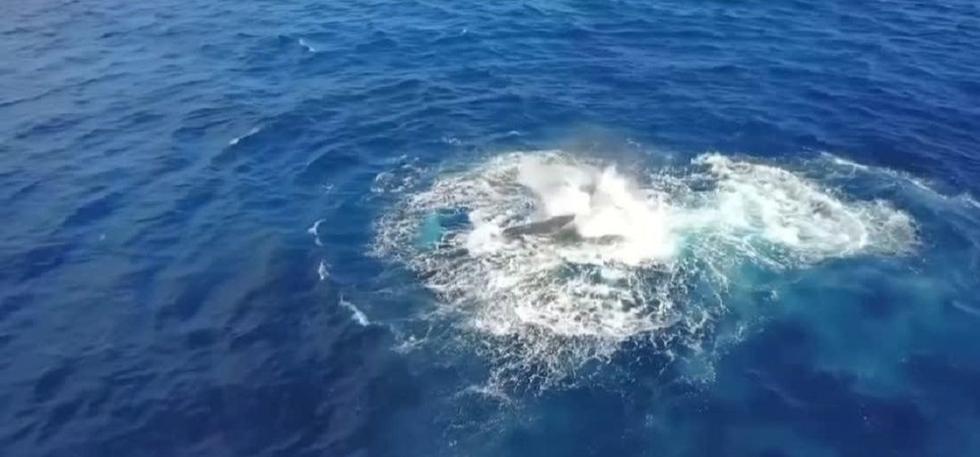
A recent study indicates that the Earth actually sucks three times as much water as scientists thought.
- Scientist Took Mesmerizing Pictures Of Underwater Aliens Below The White Sea
- Delhi Earthquake Is Just The Beginning, Scientists Warned Indians Of A Quake Stronger Than The One In Nepal In 2015
- Scientists Found A Giant Squid Deep Down The Ocean, And Here's How It Looks
Earthquakes are the kind of natural disasters that scientists can only predict, not prevent. And like other natural disasters, they come with damages and upheaval.
Now, scientists say that earthquakes are sucking huge amounts of water to the Earth’s core, at least much more than what they used to think.
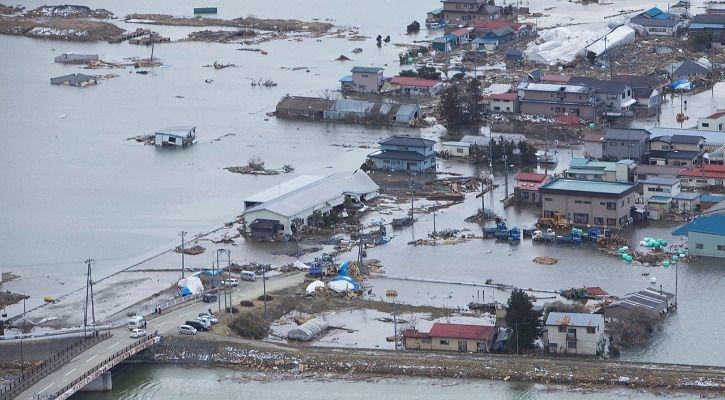
At Washington University, after a study, researchers concluded that natural earthquakes on the ocean floor are dragging down a water amount which is three times as large as they what was previously thought. An example is the earthquake-prone zone at Marianas trench, with the Pacific plate sliding beneath the Phillippine plate, where the seism activity happens. At this location, they could estimate the amount of water sucked with rocks from deep down the ocean.
Donna Shillington, a geographic researcher at Columbia University, writes that the findings in this study can help important implication for our understanding of the Earth’s deep water cycle. The sucked water which flows down into cracks in the Earth’s crust can generate more magma and “lubricate” the faults, creating greater risks of earthquakes.
However, it’s not all water that is directly entering the faults. Shillington said the water stored in crystalline structures of minerals that the Earth swallows is integrated into the Earth’s crust which contributes to the formation of new oceanic plates, and because they bend and crack against their neighbors.
Replying to Live Science, lead researcher Chen Cai said that before the study was conducted, they already knew the water must be dragged down by the subducting slab, just not sure how much.
The scientists listen to the earthquakes’ echoes in the Earth’s crust by using seismic sensors around the Marianas Trench. They spotted that the tremors traveled more slowly, which is the evidence for water in the fractures and within minerals. From this result, the team could calculate the amount of water sucked every ten million years is approximately 3 billion teragrams. In case you are not familiar with Math terms, 3 billion teragrams is a billion kilograms multiplied by 3 billion (which equals 300 billion crores).
Yet, there’s still one door unlocked, as any kind of water entering the Earth’s crust must come back up, in the form of volcanoes usually. However, researchers peg that volcanoes do not emit all the water sucked down, which means there’s still some water sucked down and we don’t know where it goes. But after all, the oceans are not losing any water, so it must have been replaced. The only question is how it’s traveling through the Earth’s crust to do that.
Featured Stories

Features - Mar 24, 2026
How to Use GeForce NOW to Play Video Games Without Actual Hardware

Features - Jan 29, 2026
Permanently Deleting Your Instagram Account: A Complete Step-by-Step Tutorial

Features - Jul 01, 2025
What Are The Fastest Passenger Vehicles Ever Created?
Features - Jun 25, 2025
Japan Hydrogen Breakthrough: Scientists Crack the Clean Energy Code with...

ICT News - Jun 25, 2025
AI Intimidation Tactics: CEOs Turn Flawed Technology Into Employee Fear Machine

Review - Jun 25, 2025
Windows 11 Problems: Is Microsoft's "Best" OS Actually Getting Worse?

Features - Jun 22, 2025
Telegram Founder Pavel Durov Plans to Split $14 Billion Fortune Among 106 Children

ICT News - Jun 22, 2025
Neuralink Telepathy Chip Enables Quadriplegic Rob Greiner to Control Games with...

Features - Jun 21, 2025
This Over $100 Bottle Has Nothing But Fresh Air Inside

Features - Jun 18, 2025
Comments
Sort by Newest | Popular