Indian Hospitals' Reduction In Antibiotics Usage Saves Lives
Dhir Acharya
Antibiotics are supposed to save people's lives, but a program actually proved the opposite.
- Delhi Is The World’s Most Polluted Capital City For Three Years In A Row
- Indian Farmers Install High-Tech, Night-Vision CCTV Cameras To Protect Themselves
- Looking For The Best Electric Bike In India 2021? Take A Look At These
Patients are taking so many antibiotics that a hospital in Kochi, India has had to reduce the use of restricted antibiotics which are referred to as the last hopes for seriously sick patients. During the last two years, Hinduja Hospital in Mumbai has managed to cut down restricted antibiotics use by 86%, leaving no adverse effect on the mortality figure.
Previously, doctors at this hospital used to let patients take antibiotics several days before surgeries, now only one day ahead.
Among a bunch of tertiary-care hospitals around Mumbai, whenever a restricted antibiotic is included in a prescription, it takes a group of doctors, plus a pharmacist to decide whether or not the patient can take that medicine based on his/her profile. Medicines for fighting harmful microbes, especially antibiotics, have been prescribed so widely that micro-organisms have grown to resist them, which has become one of the major health problems.
In 2016, a study by WHO claimed an annual 7 lakh worldwide deaths caused by the antimicrobial resistance. This figure can rise to 100 lakh in the next 30 years if we don’t do anything. In fact, Indian doctors have changed their habits in prescribing, though it may be too late.
Two years ago, the Indian Council for Medical Research launched a pilot project in Hinduja and five other hospitals in Delhi, Kolkata, and Chennai. In this project, doctors were asked to justify a restricted antibiotic to a patient in two days. Dr. Kamini Walia at ICMR said this project scale was meant for framing guidelines and get feedbacks. She aims at reducing the use of broad-spectrum antibiotics as well as promoting targeted antibiotics which affect specific organisms.
Hinduja Hospital, Mumbai, India
In the same year, Kochi Hospital, Amrita Institute of Medical Sciences, started its own antimicrobial management program for ensuring appropriate prescription. Earlier this month, the program announced the program’s findings in the Open Forum Infectious Diseases journal of Oxford University Press, in which the program leader Dr. Sanjeev claimed that the program has decreased 86% of restricted antibiotics usage, as well as 24% of deaths and notably, saved an annual cost of Rs 2.3 crore.
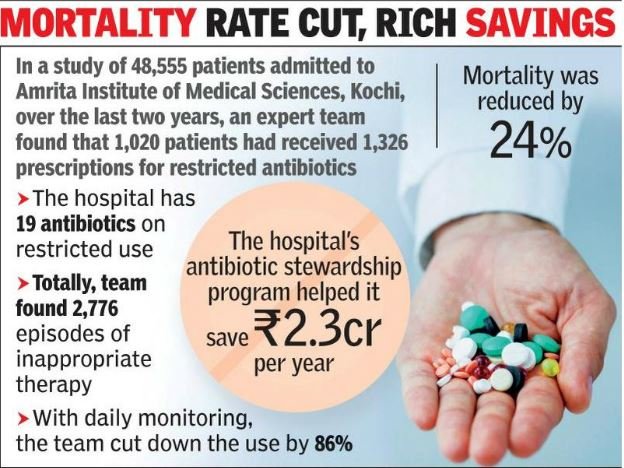
Since antimicrobial resistance remains a serious concern, Dr. Walia said the way antibiotics are prescribed must be changed. Walia explained, when doctors’ treatment is under supervision, they may be more careful with antibiotic prescriptions.
Featured Stories
Features - Jul 01, 2025
What Are The Fastest Passenger Vehicles Ever Created?
Features - Jun 25, 2025
Japan Hydrogen Breakthrough: Scientists Crack the Clean Energy Code with...
ICT News - Jun 25, 2025
AI Intimidation Tactics: CEOs Turn Flawed Technology Into Employee Fear Machine
Review - Jun 25, 2025
Windows 11 Problems: Is Microsoft's "Best" OS Actually Getting Worse?
Features - Jun 22, 2025
Telegram Founder Pavel Durov Plans to Split $14 Billion Fortune Among 106 Children
ICT News - Jun 22, 2025
Neuralink Telepathy Chip Enables Quadriplegic Rob Greiner to Control Games with...
Features - Jun 21, 2025
This Over $100 Bottle Has Nothing But Fresh Air Inside
Features - Jun 18, 2025
Best Mobile VPN Apps for Gaming 2025: Complete Guide
Features - Jun 18, 2025
A Math Formula Tells Us How Long Everything Will Live
Features - Jun 16, 2025