97% Indians Are Ready To Boycott Chinese Products Immediately
Dhir Acharya - Jun 26, 2020
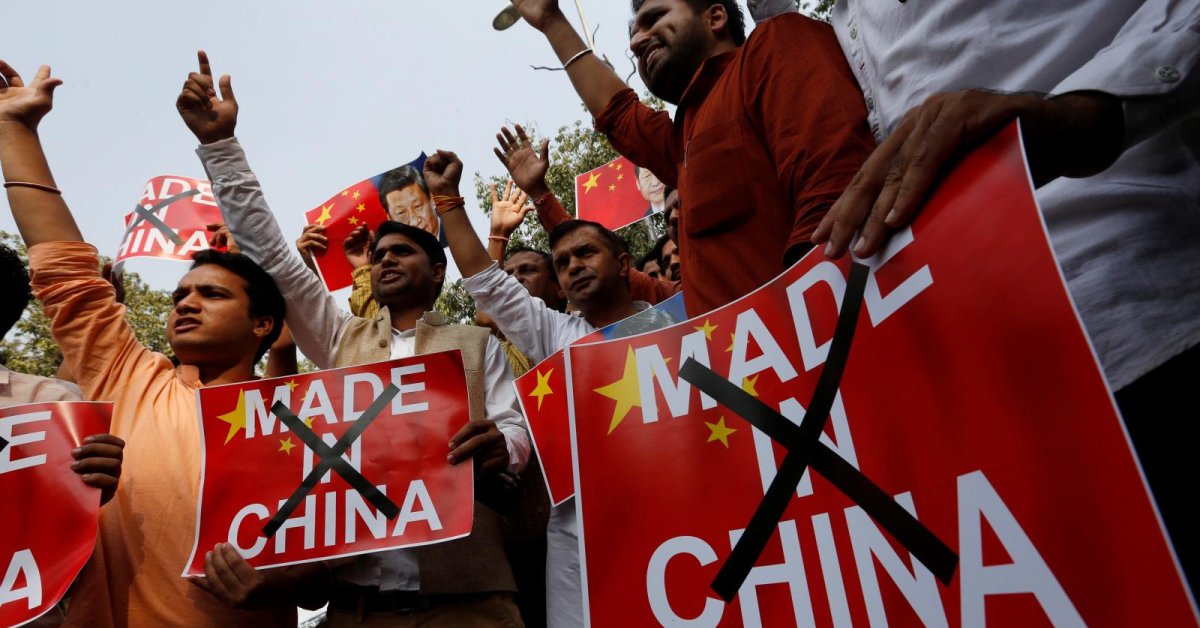
After the battle between Indian and Chinese soldiers along the Himalayan border, people across India have been calling for a ban on Chinese products.
After the battle between Indian and Chinese soldiers along the Himalayan border, people across India have been calling for a ban on Chinese products. Though it doesn’t seem possible to ban everything made-in-China or related to China, a new survey has found the percentage of the country’s population that’s willing to stop using Chinese goods.
A recent survey by LocalCircles got responses from 32,000 people living across 235 districts in India for a particular question “Would you boycott buying Chinese products for next year?” There were 8,000 answers noted, the majority of them said “yes,” meaning 87 percent of the participants were willing to stop buying Chinese products over the next one year.
It’s worth noting that the survey provided a clear distinction between a complete, immediate ban and restriction for already bought products. It asked respondents whether they would boycott using/buying products and services from Chinese brands like Xiaomi, Vivo, Oppo, Club Factory, OnePlus, Shein, Aliexpress, WeChat, TikTok, etc., effective immediately.
To this question, 58 percent of the respondents answered “yes” and that they would stop right now while 39 percent answered “yes” but will keep using what they already have.
Overall, 97 percent of the respondents are ready to boycott big Chinese brands. Instead, they want to focus on supporting Indian brands to boost the country’s self-reliance.
The survey also included further questions about boycotting Chinese products. For example, it asked whether imported Chinese products should be required to obtain certification, a large part said yes. Ninety percent of respondents said Chinese goods should obtain FSSAI, CDSCO, CRS, and BIS certifications while 5 percent said there’s no need for certification.
Previously, India imposed trade restrictions on countries like Pakistan following the Pulwama attack, including a 200% import tax for products from Pakistan. The survey asked if Chinese goods should undergo the same policy, to which 42 percent of the respondents said “yes.” On the other hand, 36 percent said that there should be import duties but not on raw materials and 20 percent objected to this idea.
>>> This App Tells You Which Products Originated From China, Check It Out!
Featured Stories

Features - Mar 24, 2026
How to Use GeForce NOW to Play Video Games Without Actual Hardware

Features - Jan 29, 2026
Permanently Deleting Your Instagram Account: A Complete Step-by-Step Tutorial

Features - Jul 01, 2025
What Are The Fastest Passenger Vehicles Ever Created?

Features - Jun 25, 2025
Japan Hydrogen Breakthrough: Scientists Crack the Clean Energy Code with...

ICT News - Jun 25, 2025
AI Intimidation Tactics: CEOs Turn Flawed Technology Into Employee Fear Machine

Review - Jun 25, 2025
Windows 11 Problems: Is Microsoft's "Best" OS Actually Getting Worse?

Features - Jun 22, 2025
Telegram Founder Pavel Durov Plans to Split $14 Billion Fortune Among 106 Children

ICT News - Jun 22, 2025
Neuralink Telepathy Chip Enables Quadriplegic Rob Greiner to Control Games with...

Features - Jun 21, 2025
This Over $100 Bottle Has Nothing But Fresh Air Inside

Features - Jun 18, 2025
Comments
Sort by Newest | Popular