Scientist Team Behind First Ever Image Of A Black Hole Wins $3 Million Breakthrough Prize
Sundar Pichai - Oct 07, 2019
The 2020 Breakthrough Prize is well-known as the “Oscars of Science”. It awarded a total of $21.6 million to the greatest achievements in various fields including Life Sciences, Fundamental Physics, and more.
- Scientists Research Black Holes In A Bid To Build Quantum Teleporter
- NASA Released A New Black Hole Simulation And It's Mesmerizing
- There's A Slew Of Black Holes In The Milky Way, Scientists Discovered
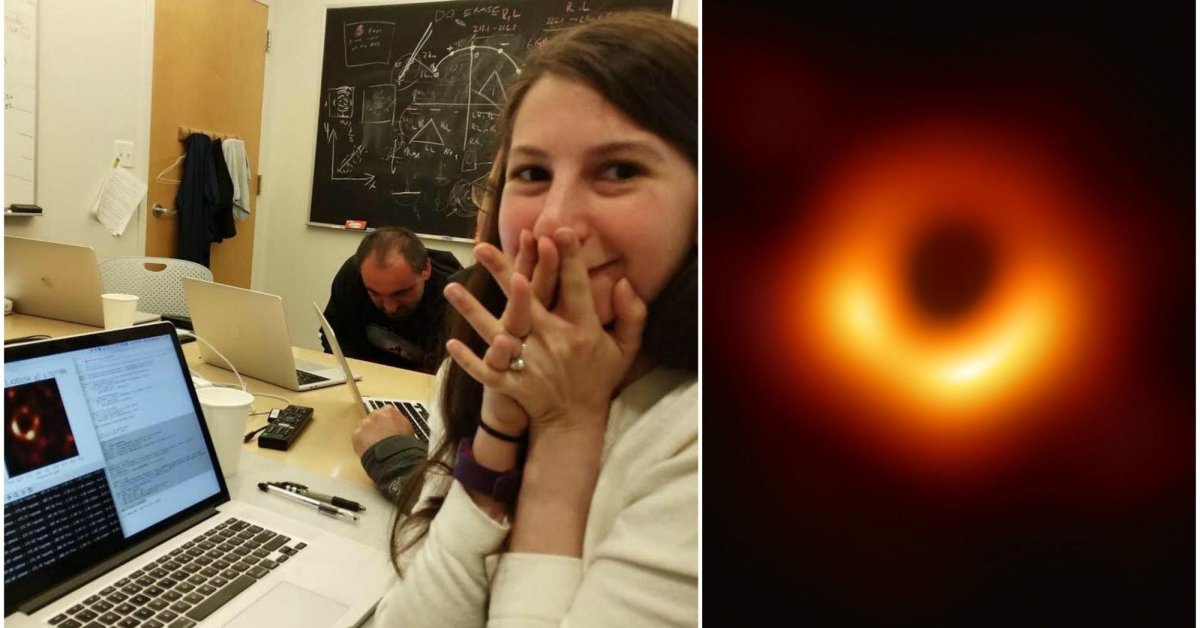
The Event Horizon Telescope Collaboration who captured the first image of a black hole back in April this year has won the Breakthrough Prize in Fundamental Physics. The 2020 Breakthrough Prize, renown as the “Oscars of Science”, awarded a total of $21.6 million to the greatest achievements in various fields including Life Sciences, Fundamental Physics, Mathematics, and more.

More than 300 scientists who contributed to any of the six papers published on April 10 will share the $3 million Breakthrough prize. They have together succeeded in taking the image of the Messier 87’s monster black hole which is 55 million light years from Earth.

The black hole have long been one of the most mysterious objects across the universe. But not until the accomplishment of the Event Horizon Telescope Collaboration did “the bottomless well of gravity” become observable. For this remarkable shot, scientists have synchronized observations from eight telescopes scattered across four regions, facilitating the creation of an Earth-sized observation instrument.

The 347 team members will each receive an equal sum of $8,600 for their efforts and dedication. There’re already a variety of awards honoring excellent researchers who have contributed to the development of science and innovation. However, the Breakthrough Prize prominently offers the highest monetary reward.
Katie Bouman: The woman behind the data processing algorithm
Katie Bouman, the spokeswoman of the team, alongside with other three members has developed the algorithm which was supposed to daily deal with 350TB of data per each radio telescope. Thanks to the algorithm, scientists were able to reconstruct an image with 2000x resolution as compared with the photo taken by the HubbleTelescope.

Assuredly, that wasn’t the only achievement of Katie Bounman but all the hard work and sacrifice by the whole team. Harvard astronomer Shep Doeleman, the director of EHT said such award signified a touchstone for many people, and they would create more science with the instrument, including those in other fields.
Featured Stories

Features - Mar 24, 2026
How to Use GeForce NOW to Play Video Games Without Actual Hardware

Features - Jan 29, 2026
Permanently Deleting Your Instagram Account: A Complete Step-by-Step Tutorial

Features - Jul 01, 2025
What Are The Fastest Passenger Vehicles Ever Created?

Features - Jun 25, 2025
Japan Hydrogen Breakthrough: Scientists Crack the Clean Energy Code with...

ICT News - Jun 25, 2025
AI Intimidation Tactics: CEOs Turn Flawed Technology Into Employee Fear Machine

Review - Jun 25, 2025
Windows 11 Problems: Is Microsoft's "Best" OS Actually Getting Worse?

Features - Jun 22, 2025
Telegram Founder Pavel Durov Plans to Split $14 Billion Fortune Among 106 Children

ICT News - Jun 22, 2025
Neuralink Telepathy Chip Enables Quadriplegic Rob Greiner to Control Games with...

Features - Jun 21, 2025
This Over $100 Bottle Has Nothing But Fresh Air Inside

Features - Jun 18, 2025
Comments
Sort by Newest | Popular