Surprise! AI Needs To Sleep Too
Aadhya Khatri - Jun 13, 2020

We are not so sure about whether androids have dreams but scientists from Los Alamos National Laboratory agree that they need to sleep
- Palantir CTO Identifies Iran Conflict as First Large-Scale AI-Driven War
- AI's Role in Warfare: US Strikes on Iran Unveiled
- Elon Musk's Bold Chip Venture: Tesla's Massive Fab Initiative Sparks AI Hardware Competition
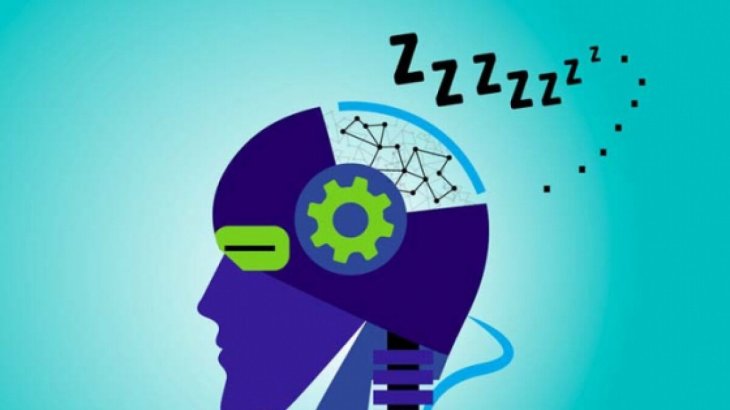
We are not so sure about whether AI have dreams but scientists from Los Alamos National Laboratory agree that they need to sleep. Well, not exactly our kind of sleep but rather periods of rest.
According to Yijing Watkins, a computer scientist at Los Alamos National Laboratory, what her team did was to train AI so that they learn things in the way similar to humans’ when we were young.
The team noticed that after a period of continuous unsupervised learning, the networks became unstable. But when they let them experience waves our brain is exposed to when we sleep, they became stable again.
This finding came to light when researchers are trying to develop neural network that can mimic the ways humans and other living organisms learn. Their biggest obstacle back then was to stabilize neural networks in their unsupervised dictionary training.
According to Watkins, the problem of system becoming unstable only shows up when trying to use biologically realistic neuromorphic processors. The reason why researchers of AI, deep learning, and machine learning have never encountered this issue before is that they have access to global mathematical operations, which regulate the dynamical gain of systems.
The researchers said exposing their neural networks to periods of sleep-like rests was the last-resort solution to stabilize them.
Before choosing the right waves that have the effect of making them stable, the researchers have experimented with several different noise types, similar to the static you hear when changing radio stations.
When they experimented with Gaussian noise, making up of a several amplitudes and frequencies.
What comes next for the researchers is implementing the algorithm on the Loihi neuromorphic chip of Intel. They think letting Loihi rests will help it process data gathered by a silicon retina camera stably in real time.
If the team can prove that AI systems need to sleep, we can expect androids and the like to rest from time to time in the future.
The finding will be presented at Women in Computer Vision Workshop taking place on the 16th of June in Seattle.
>>> Facebook Is Using AI To Teach Kids To Avoid Being Kidnapped
Featured Stories

Features - Mar 24, 2026
How to Use GeForce NOW to Play Video Games Without Actual Hardware

Features - Jan 29, 2026
Permanently Deleting Your Instagram Account: A Complete Step-by-Step Tutorial

Features - Jul 01, 2025
What Are The Fastest Passenger Vehicles Ever Created?

Features - Jun 25, 2025
Japan Hydrogen Breakthrough: Scientists Crack the Clean Energy Code with...

ICT News - Jun 25, 2025
AI Intimidation Tactics: CEOs Turn Flawed Technology Into Employee Fear Machine

Review - Jun 25, 2025
Windows 11 Problems: Is Microsoft's "Best" OS Actually Getting Worse?

Features - Jun 22, 2025
Telegram Founder Pavel Durov Plans to Split $14 Billion Fortune Among 106 Children

ICT News - Jun 22, 2025
Neuralink Telepathy Chip Enables Quadriplegic Rob Greiner to Control Games with...

Features - Jun 21, 2025
This Over $100 Bottle Has Nothing But Fresh Air Inside

Features - Jun 18, 2025
Comments
Sort by Newest | Popular