Based On Chest X-Ray Data, AI Can Predict Long-Term Mortality
Anita - Aug 18, 2019
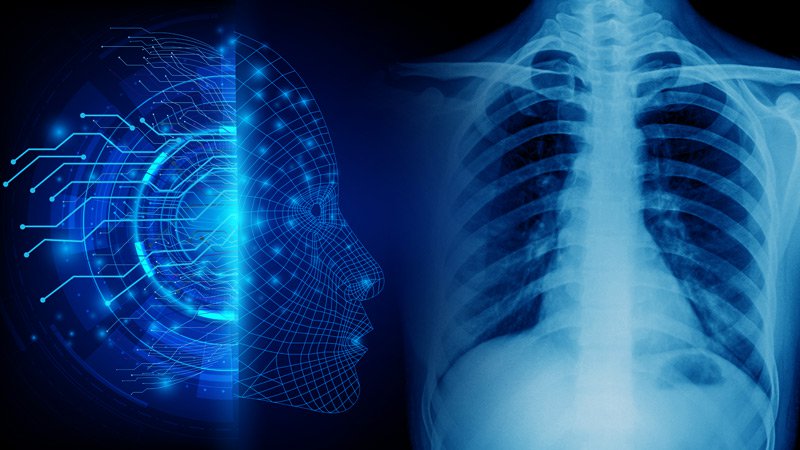
Scientists have built an AI-backed tool which can extract the data in chest X-rays to offer long-term mortality prediction.
- Palantir CTO Identifies Iran Conflict as First Large-Scale AI-Driven War
- AI's Role in Warfare: US Strikes on Iran Unveiled
- Elon Musk's Bold Chip Venture: Tesla's Massive Fab Initiative Sparks AI Hardware Competition
A tool equipped with AI (Artificial Intelligence) has been developed by researchers to collect chest X-ray information for the long-term mortality prediction.

This study’s findings, which was published in JAMA Network Open journal, could assist in identifying patients who can benefit from the medical examination as well as preventive healthcare for lung cancer, cardiovascular disease, and other medical conditions.
According to Michael Lu, Harvard Medical School - Massachusetts General Hospital, a member of the researching team, this is a new method to harvest prognostic data from daily diagnostic tests. Lu said:

He and other researchers built an AI-powered convolutional neural network called CXR-risk for visual information analysis.
The researchers trained the network by letting it analyze over 85,000 chest X-ray images from 42,000 people who were part of an earlier trial.

Every photo was matched with a piece of important information: Did the person pass away over a 12-year period?
The main purpose was for the CXR-risk network to study the features or a set of features on an image of chest X-ray which could best predict mortality and health.
Then, the researcher team carried out a test on the CXR-risk by collecting X-ray images of 16,000 participants from 2 previous clinical trials.
As a result, 53% people that the CXR-risk labeled as “very high risk” passed away more than 12 years while those who the network identified as “very low risk” accounted for fewer than 4%.
In addition, according to the research, the neural network offered data which can forecast long-term mortality, which is not influenced by the readings of radiologists on x-rays as well as other elements like age and smoking status.
Lu believes that this new AI-powered tool will become more accurate when paired with other factors like smoking status and genetics.
Featured Stories

Features - Mar 24, 2026
How to Use GeForce NOW to Play Video Games Without Actual Hardware

Features - Jan 29, 2026
Permanently Deleting Your Instagram Account: A Complete Step-by-Step Tutorial

Features - Jul 01, 2025
What Are The Fastest Passenger Vehicles Ever Created?

Features - Jun 25, 2025
Japan Hydrogen Breakthrough: Scientists Crack the Clean Energy Code with...

ICT News - Jun 25, 2025
AI Intimidation Tactics: CEOs Turn Flawed Technology Into Employee Fear Machine

Review - Jun 25, 2025
Windows 11 Problems: Is Microsoft's "Best" OS Actually Getting Worse?

Features - Jun 22, 2025
Telegram Founder Pavel Durov Plans to Split $14 Billion Fortune Among 106 Children

ICT News - Jun 22, 2025
Neuralink Telepathy Chip Enables Quadriplegic Rob Greiner to Control Games with...

Features - Jun 21, 2025
This Over $100 Bottle Has Nothing But Fresh Air Inside

Features - Jun 18, 2025
Comments
Sort by Newest | Popular