Cotton-Based Biofuel Cell: A New Solution To Power Implantable Medical Devices
Jyotis
It can be applied to charging implantable medical devices like sensors or pacemakers.
The scientists from the Georgia Institute of Technology, US, have introduced a new kind of biofuel cell that can be charged by glucose. Cotton fiber is the primary material to build up electrodes of the advanced cell.
According to the scientists, it can be applied to charging implantable medical devices like sensors or pacemakers. Its one of the most outstanding advantages is the capability to power 2 times faster than biofuel cells in the present market. When combined with ultracapacitors or batteries, the cell can supply a hybrid power source.
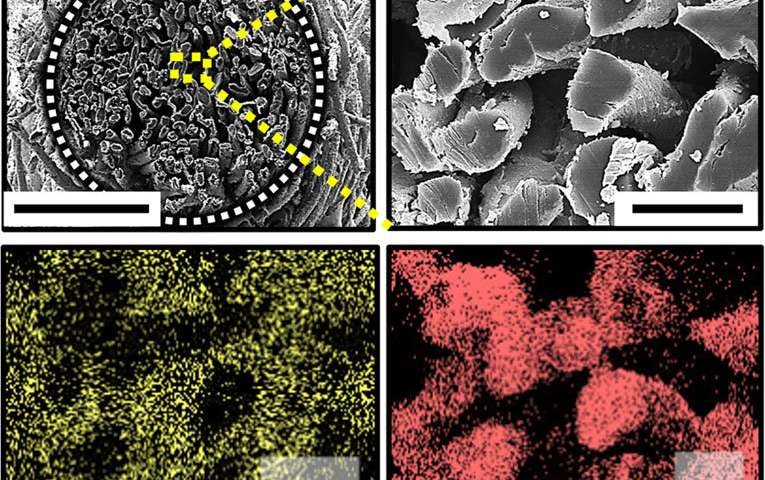
The journal Nature Communications revealed that electrodes with high conductivity formed by gold nanoparticles placed on the cotton would enhance the efficiency of the biofuel cell.
Thereby, it’s much easier for scientists to deal with one complex problem that directly affects the biofuel cells’ performance: that is how to connect the enzyme and use an electrode to oxidize glucose.
To create the gold electrodes, they used a layer-by-layer assembly technique to increase the power capacity to 3.7 mW for each square centimeter. These electrodes will form the conductive substrate and the electrocatalytic cathode for the anode.
Seung Woo Lee as an assistant professor of Georgia Tech unveiled that the biofuel cell can operate continuously to turn chemical energy available in glucose inside our body into electrical power.

Thanks to the deposition technique with many layers, they can easily to accurately monitor how the enzyme and the gold nano-particle are deposited and boost the cell’s power density.
Also, the scientists used porous cotton fibers made of countless microfibrils which contain hydroxyl groups to fabricate the electrodes. And then, they made use of organic linker materials to put 8-nanometer-diameter gold nanoparticles into the fibers.
According to the scientists across the world, including those who are working at Korea University, along with TREN – a tiny molecule with the amine function, the layer-by-layer notatin (GOx) was applied to form the anode that can oxidize the glucose.
Owning the capabilities of electrocatalysis, the cathode is the place to see the reaction of the oxygen fall and mine the electrodes wrapped by gold.
The advantage of the cotton fiber over the nylon one is that the number of gold layers will be risen due to the cotton’s porosity. Moreover, as per the biological aspect, this kind of fiber is said to have the higher compatibility with the device as well as help the electrodes to conduct the electricity better. Longer battery lifespan is also another plus.
Featured Stories
Gadgets - Jul 05, 2026
OneOdio Studio Max 2 Review: Built Like A DJ Headphone, Best Used At A Desk
Gadgets - Jul 01, 2026
Top 5 Most Expensive Headphones in 2026
Gadgets - Mar 08, 2026
Best Budget Keyboards of 2026
Gadgets - Feb 27, 2026
Top Budget-Friendly WiFi Routers for 2026
Gadgets - Feb 25, 2026
Top 4 Budget Rechargeable Wireless Mice
Gadgets - Feb 24, 2026
3 Budget Monitors That Reduce Eye Strain and Improve Productivity
Gadgets - Jul 21, 2025
COLORFUL Launches iGame Shadow II DDR5 Memory for AMD Ryzen 9000 Series
Gadgets - Jun 23, 2025
COLORFUL SMART 900 AI Mini PC: Compact Power for Content Creation
Review - Jun 18, 2025
Nintendo Switch 2 Review: A Triumphant Evolution Worth the Wait
Gadgets - Jun 18, 2025
Starlink: Why It’s a Big Deal for U.S. Internet in 2025
Read More
Mobile- Sep 18, 2026
The $1,999 iPhone Duo Still Carries Foldables' Oldest Flaw
The Duo is Apple's most ambitious iPhone redesign in years.
ICT News- Sep 19, 2026
Washington Acknowledges Operational Weapons in Earth Orbit
Once one power confirms weapons in orbit, others have a stronger incentive to match the claim, match the hardware, or both.