Top 10 Mathematical Innovations That Definitely Shape The World
Anil - Jul 16, 2019
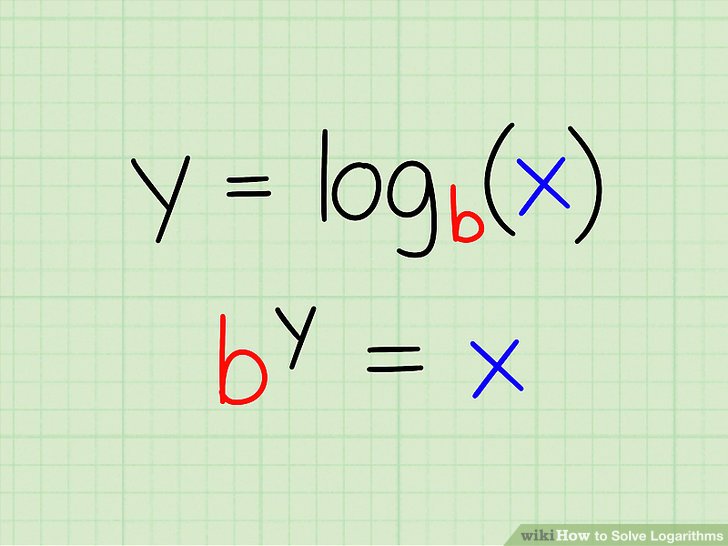
Let's pay a visit to the history of mathematics to find out some of the most important mathematical innovations in thousands of years.
- A Math Formula Tells Us How Long Everything Will Live
- Shakuntala Devi Awarded Guinness World Records’ Fastest Human Computation Certificate After 40 Years
- This Magical Number Will Help You Find A Parking Space, The Perfect Apartment, And Even A Suitable Spouse
1. Arabic numerals
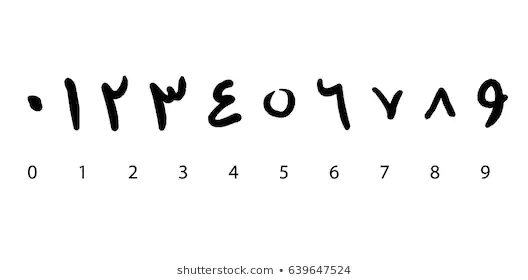
Numbers are an irreplaceable mathematical invention during human history timeline. In fact, Roman numerals didn’t help much in creative quantitative science, and you might never want to try a complicated calculation with them. Western European science started making great advances when Fibonacci introduced Arabic numerals in the 13th century. The Italian mathematician did take the numerals from doing business in the Middle East and Africa. However, Arabs were believed to get such numerals concept from the Hindu people, so maybe calling them Hindu numerals is not wrong.
2. Calculus (Isaac Newton, Gottfried Leibniz)
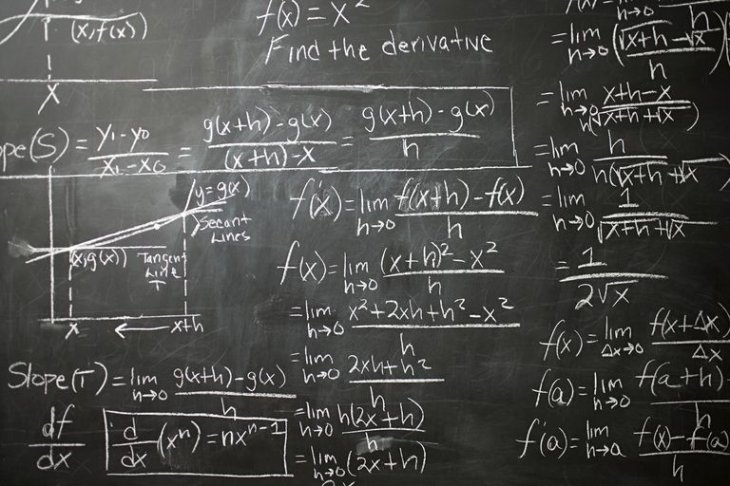
Arguments related to the question of who was the father of calculus never shut off. The story is that Newton took all the fame, even though German mathematician Leibniz also invented calculus independently at the same time and his credit is more convenient for even modern mathematics. Put aside, calculus has shown us its important role: it makes science issues possible – everything from thermodynamics, neuroscience, astronomy, architecture, and so on.
3. Zero and 3. Negative numbers (Brahmagupta)

Negative numbers were popularly discussed in the history of mathematics, but the ancient Indian astronomer Brahmagupta was the first one making sense of them in seventh-century. It did not seem like a coincidence as he noticed that the concept of zero makes negative numbers meaningful: the number zero made sense when it was what you would result from a subtraction between a number and itself.
4. Decimal fractions (Simon Stevin, Abu’l Hasan Al-Uqlidisi)
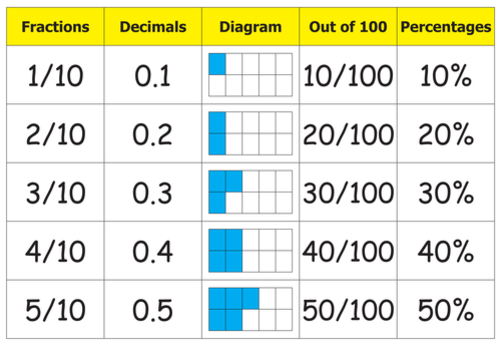
Long before the born of decimal fractions, the basic idea of decimals was found limitedly in some ancient documents. Until 1585, Simon Stevin first wrote about the idea in a pamphlet to introduce it to his European audience. From his practical point of view, this approach could bring valuable contributions to many people, including merchants, surveyors or astrologers.
5. Binary logic (George Boole)

George Boole was considered as the father of binary logic when coming up with an idea of “laws of thought” in mathematical representation, meaning that using symbols on behalf of mathematical concepts. He realized the snag when his system requirements are only done with two numbers, 0 and 1. From that, a book of doing logic with number 0 and number 1 has been published by George to significantly affect modern computer languages.
6. Non-Euclidean geometry (Carl Gauss, Nikolai Lobachevsky, János Bolyai, Bernhard Riemann)
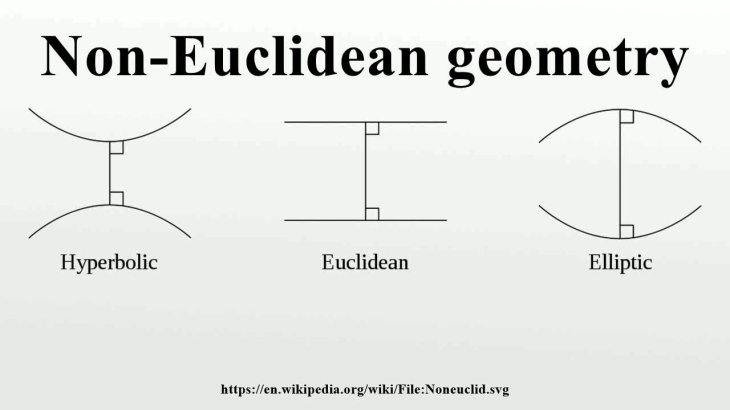
The German genius Carl Gauss could be the first one figuring out an alternative to traditional geometry of Euclid, but others got the credit for applying non-Euclidean mathematics to space then producing non-Euclidean geometry to help Einstein in his general relativity theory. While the existed ideas had no need to check the priori by experiments and observations, non-Euclidean geometry demolished out-dated those all.
7. Complex numbers (Girolamo Cardano, Rafael Bombelli)
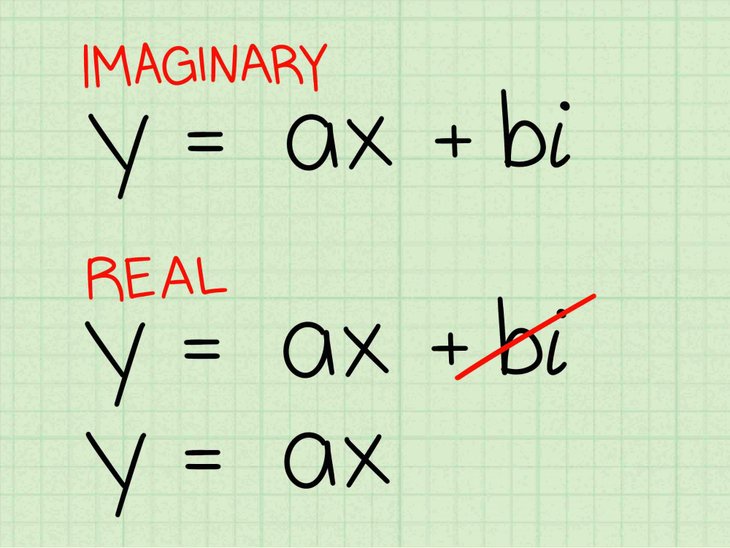
Nobody but Cardano took square roots of negative numbers very seriously as they even considered them as meaningless despite their presence in various equations. The mathematician Bombelli later worked on the details of complex numbers calculations to combine roots of negative numbers with ordinary ones in the mid-16th century. In the 17th century, John Wallis did make the first case to prove the physical meaning of square roots of negative.
8. Matrix algebra (Arthur Cayley)
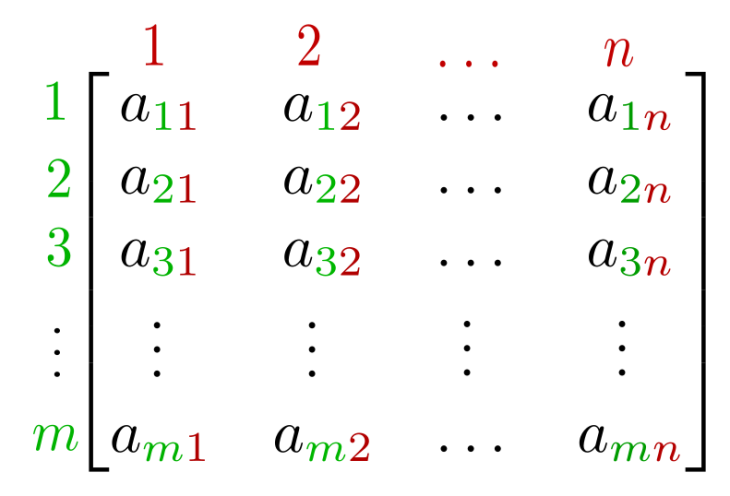
Matrix-like calculations were first found in ancient Chinese mathematics, but Cayley was the mathematics that brings their modern form to the world in the 19th century. Note that a number of others also discovered similar matrix multiplication such as Jacques Binet. One of the most dedicated applications of matrix algebra is that matrices played an irreplaceable role in quantum mechanics. In fact, the famous physicist Werner Heisenberg was unaware of the existed matric algebra when reinventing an identical system to make quantum calculations.
9. Logarithms (John Napier, Joost Bürgi, Henry Briggs)
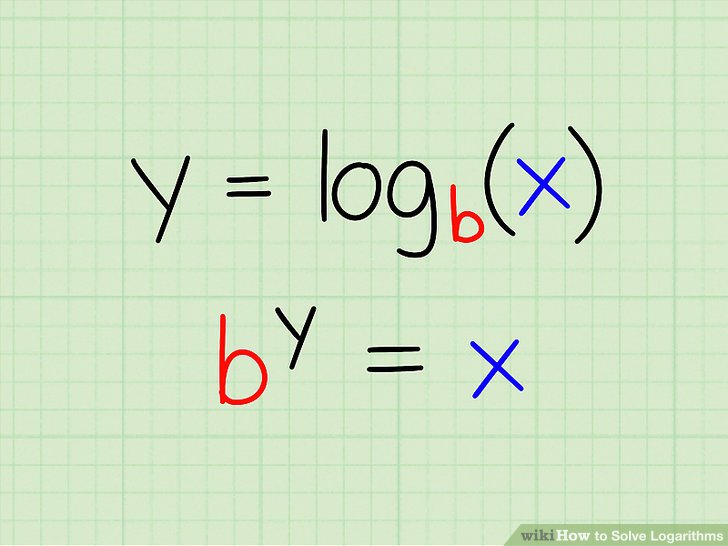
Logarithms have made a great aid to mathematics and its relationships with various other fields. The idea was initialized in the late 16th century by Napier and Burgi. However, both of them had calculated log tables for a couple of decades before going public with logarithms. In 1614, Napier first introduced them then Briggs reformed Napier’s version and successfully made the mathematical innovation popular.
Featured Stories

Features - Jul 01, 2025
What Are The Fastest Passenger Vehicles Ever Created?

Features - Jun 25, 2025
Japan Hydrogen Breakthrough: Scientists Crack the Clean Energy Code with...

ICT News - Jun 25, 2025
AI Intimidation Tactics: CEOs Turn Flawed Technology Into Employee Fear Machine

Review - Jun 25, 2025
Windows 11 Problems: Is Microsoft's "Best" OS Actually Getting Worse?

Features - Jun 22, 2025
Telegram Founder Pavel Durov Plans to Split $14 Billion Fortune Among 106 Children

ICT News - Jun 22, 2025
Neuralink Telepathy Chip Enables Quadriplegic Rob Greiner to Control Games with...

Features - Jun 21, 2025
This Over $100 Bottle Has Nothing But Fresh Air Inside

Features - Jun 18, 2025
Best Mobile VPN Apps for Gaming 2025: Complete Guide

Features - Jun 18, 2025
A Math Formula Tells Us How Long Everything Will Live

Features - Jun 16, 2025
Believe It Or Not, Dirt From Mars Can Be Bought With Only $20 A Kilogram
Read more

ICT News- Dec 25, 2025
The Visibility Concentration Effect: Why Half the Web Isn’t Qualified Anymore
AI search concentrates visibility among a small group of widely referenced brands. Data from 75,000 brands shows a sharp divide: without qualified third-party mentions, even well-optimized sites struggle to appear in AI-generated...
Comments
Sort by Newest | Popular