New Sensor With Graphene Could Help Improve Food Safety
Saanvi Araav
Graphene has excellent electronic and optical properties which make it the perfect candidate to use for plasmon sensors - which help improve food safety.
- Samsung To Create Ultra-High-Resolution 600MP Camera Sensors
- This YouTuber Built His Own Digital Camera Sensor, You Can Too
- This New Sensor Can Work Underwater, No Need For Batteries
Graphene has excellent electronic and optical properties which make it the perfect candidate to use for plasmon sensors. It is a type of sensors that emit electromagnetic waves which propagate on the surface of the material with light exposure. Scientists can detect a specific substance by measuring how the changes in the index of the sensor when a substance gets close to the surface of graphene. Scientists have been using its unique properties to make materials and sensors for many application recently.
Improve food safety
For food safety application, scientists made a sensor that use graphene to make it easier than before to detect pathogens in food product before getting it to the supermarket. With this new sensor, they could detect contaminated food, thus prevent dangerous illnesses. This new sensor can detect multiple substances at the same time including other pathogens and dangerous bacteria.
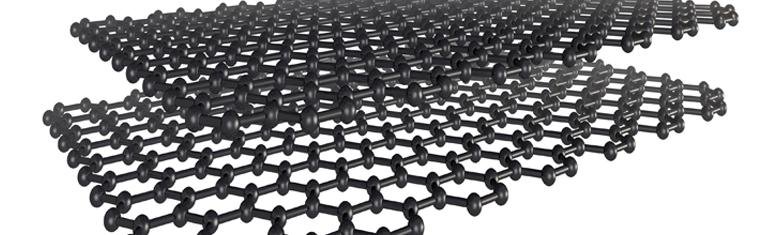
Two-dimensional carbon crystals
More than just food safety, the new sensor design could also help with detecting chemicals and gases that have many practical applications. From China Jiliang University, Bing-Gang Xiao said that their sensor design used graphene sheets, which, basically, are two-dimensional carbon crystals with the thickness of just one atom. He also added that the sensor was very sensitive, and that they could also adjust it to detect different substances.
The new sensor design
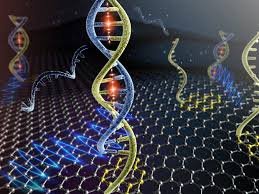
When compared to silver and gold, graphene could emit stronger electromagnetic waves with longer distances. We can also change the wavelength of its responsiveness by using polarisation voltage instead of changing the whole structure of the device. In any case, only a couple of past researches showed that delicate graphene sensors could work with infrared wavelengths which are important to detect biomolecules and microbes. With the new one, the scientists utilized hypothetical simulations and computations to structure a variety of graphene disks with off-center holes which are used to detect simultaneously many substances.
To identify different substances the graphene's properties needs to be tuned by voltage, which is applied through silicon and ion-gel layers. The sensitivity of the sensor can be enhanced by the plasmon hybridisation effect - the interaction between the disks and their holes.
Featured Stories
Features - Mar 24, 2026
How to Use GeForce NOW to Play Video Games Without Actual Hardware
Features - Jan 29, 2026
Permanently Deleting Your Instagram Account: A Complete Step-by-Step Tutorial
Features - Jul 01, 2025
What Are The Fastest Passenger Vehicles Ever Created?
Features - Jun 25, 2025
Japan Hydrogen Breakthrough: Scientists Crack the Clean Energy Code with...
ICT News - Jun 25, 2025
AI Intimidation Tactics: CEOs Turn Flawed Technology Into Employee Fear Machine
Review - Jun 25, 2025
Windows 11 Problems: Is Microsoft's "Best" OS Actually Getting Worse?
Features - Jun 22, 2025
Telegram Founder Pavel Durov Plans to Split $14 Billion Fortune Among 106 Children
ICT News - Jun 22, 2025
Neuralink Telepathy Chip Enables Quadriplegic Rob Greiner to Control Games with...
Features - Jun 21, 2025
This Over $100 Bottle Has Nothing But Fresh Air Inside
Features - Jun 18, 2025